
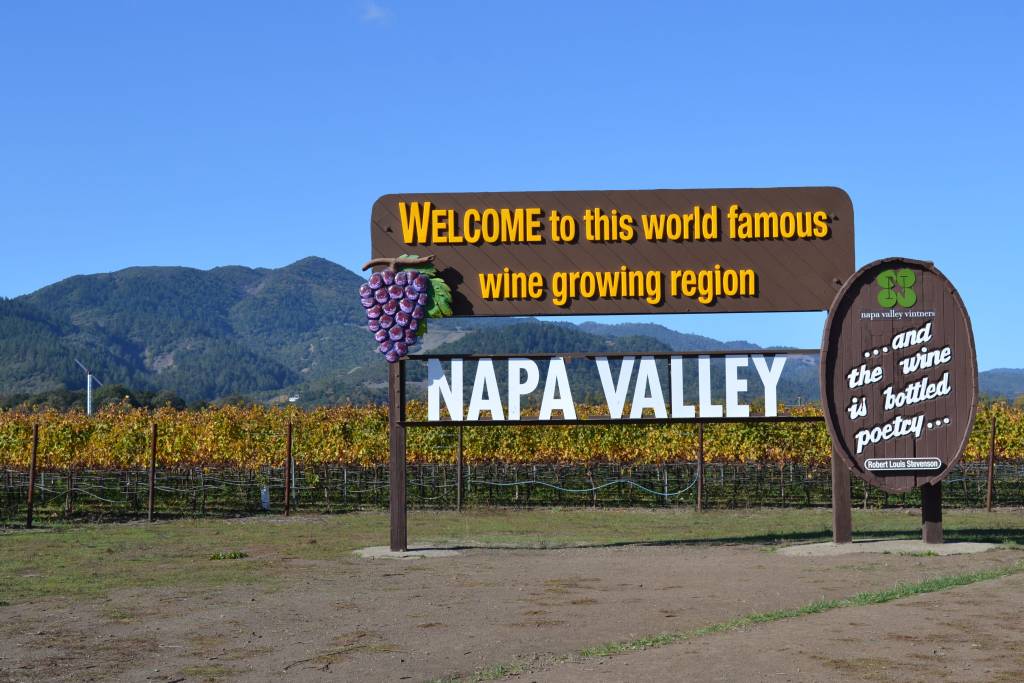
A sea of vineyards as far as the eye could see. Endless waves of green, rolling in the balmy California breeze, gave Rob Young motion sickness. The rocking of the car and vibrations of the uneven road made his queasiness worse and he cracked a window to let in some air. It didn’t help.
The sloping hills of Napa County boxed him in from all sides. As he got closer to his destination, Young reflected that for as much as he disliked the never-ending glut of wine know-it-alls, food bloggers and culinary freaks who flocked to Yountville every year, the beautiful people who TikToked and Instagrammed their way to five-second fame in Calistoga, the smug, fatcat Michelin chefs swinging their dicks Downtown, he would never be able to truly escape it all.
Everything he disliked about his home kept him employed as a journalist. It was in his blood, thicker than the wine that made Napa Valley famous.
Young’s latest assignment brought up a mixture of doubt, amusement and unease. it mingled with the motion sickness, making his head pound. The main road diverged into a series of rough dirt trails and Young lamented that he wasn’t being paid enough to profile cooks and weirdos. It was also the most interesting part of the job.
Looking at his GPS, Young wondered if he was going in the right direction. The vineyards had melted away and all he saw was dust, rocks and the occasional cactuses. Young continued to follow the GPS, deciding he’d come too far to turn back.
After what seemed like an age, a big wooden gate appeared at the end of a trail. Parking outside the gate, Young double-checked the GPS to make sure he was exactly where he needed to be. He got his equipment out of the car and two signs on the gate caught his attention.
The first sign had an inscription that read “Stranger, your time will be pleasant here. Here the highest good is pleasure.” Looking at the other inscription, Young also spoke the words aloud. “Let no one ignorant of geometry enter here.”
“No way that’s giving me cult vibes…” Young muttered, opening the gate and striding down the path towards a farm surrounded by fields of bright flowers. The amount of colour shocked Young. Delicate purple Douglas irises. Towering blue sky lupines. Brilliant orange Indian paintbrush. Soft white yarrow and dozens of other plants native to California and beyond filled his senses.
Among the flowers and vegetation, several people pottered around. The first to acknowledge Young was a man who looked to be in his mid-twenties dressed in a light grey vest, ripped shorts and sandals. He smiled at Young.
“Can I help you, my man?”
Young scrutinised the kid. “Yeah, maybe you can. I’m here to interview Montgomery Armstrong and wondering where he is?”
“You a reporter?” The man asked, pushing his hands into pockets.
Young nodded. “Something like that. I work for The Napa Gazette and write food and drink stories.”
“That’s awesome. Think it’s cool you’re here to tell Monty’s story. He’s been dropping wisdom on me ever since I got here.”
“Oh yeah? What kind of wisdom would that be?” Young replied, his journalistic instincts kicking in.
“Lots of things really. Like true pleasure is the absence of pain. Know what I mean?”
Young didn’t.
“That’s what I’m here to find out,” he said, adjusting his response to get the kind of information and context he needed.
“Right on,” the man smiled and might have said more if not for the interruption of an older woman with her hair done up with a tye-dyed bandana.
“Did I overhear you’re the journalist hear to talk to Monty?” She said, more guarded than the kid.
“That’s right. Name’s Rob Young. I’m here to find out more about your community.”
The older woman’s stony expression didn’t change. She suggested to the kid, whose name was Gus, that he help the others with picking fruit and that she’d take Young to see Monty.
Young walked beside the woman through the fields towards the big white house in the centre of the flowers. His attempt to ask more questions was met by cool indifference. Her only words were, “Welcome to Kepos, Mr Young. I sincerely hope you find what you’re looking for.”
The woman was polite enough, though he sensed the undercurrent of suspicion in her voice. She led him through the front door, through a rustic living room and out onto a veranda, where Montgomery Armstrong sat in a chair, sipping a cup of water.
“Sorry for interrupting your meditation, Monty. Mr Young, your guest has arrived. Would you like me to put on some tea?” The woman’s demeanour shifted. She was animated, bubbly as if being in Armstrong’s presence had reinvigorated her.
Armstrong smiled. “No apologies necessary, Julia. And thank you so much for coming. Would you like some tea?”
Young shook his head. “A glass of water would be great.”
“I’ll have a refill as well please,” Armstrong finished his water and handed his cup to Julia. She disappeared back into the house and Armstrong invited Young to sit down in the empty chair beside him.
“I’m truly glad you could make it. Your stories in The Napa Gazette always provide wonderful food for thought.” Armstrong declared, stretching out his shoulders.
With his mop of white hair, tanned skin and black sunglasses, Armstrong looked like the snowbirds who came from up North to Napa for the sun, warmth and slower pace of living.
“Well, it’s always nice to have a loyal readership, Mr Armstrong. It’s people like you who keep me writing and leading an interesting life.”
“Call me Monty. I left Mr Armstrong back in the board room and I’ve not looked back since. What’ve you thought of Kepos so far? Were you expecting a Charlie Manson situation?”
Young registered the playfulness in the man’s voice. Honestly, he hadn’t known what to expect. First and foremost, he was a professional. Keeping an open mind made him effective at his job. As soon as he’d walked through the gate he’d left all preconceived notions behind.
“I don’t know what I think yet,” Young said. “I’m more focused on gathering the facts than anything else.”
Armstrong smiled again. “A very philosophical answer.”
Julia came back and put two cups of water on the table. Shifting position in his chair, Young took a sip to clear his throat. “We can start the interview whenever you’re ready. I’ll ask you some questions, record on my device and jot down some extra notes too.”
“No time like the present.”
Young went into his bag and took out his voice recorder and notepad.
“Let’s start with why and how you came to be where you are today.”
Armstrong took off his sunglasses, revealing pale blue eyes flickering with life. “I’ve never been religious. When I look back at my trajectory as a young man, money and success were my gods and going to Wall Street was the best way I knew how to worship them.
I spent years in and out of big investment firms and that gave me what I thought I needed to get ahead. I believe I was about 31 or 32 when I set up with a couple of partners and I kept on going until I was in the Fortune 500 club.
At that point, some of the partners were happy to sit back. I wasn’t. I wanted more. I kept on chasing that money dragon and I didn’t care whom I had to step over to get to the next level. Spent a lot of years wanting the wrong things and then everything changed when I found Epicureanism.” Armstrong paused and Young wondered if it was for dramatic effect.
“Tell me about that.”
“Do you know much about Epicureanism, Mr Young?”
“A little. I know it’s Greek philosophy. Always thought of it as enjoying fine meals and experiences.”
“That’s what I thought for a long time too. Let’s just say I wasted a lot of time practising hedonism instead of Epicureanism.” Armstrong chuckled, taking another sip of his water.
“The philosophy is all about moderation. Hell, Epicurus himself ate mostly bread and called cheese a luxury! He was thousands of years ahead of his time in understanding what people actually need to be happy and that’s very little. Food, water and shelter. Those are natural and necessary pleasures. Then there are natural and not necessary pleasures and pleasures that aren’t necessary or natural at all.”
Armstrong waved his hand out towards the plains of Napa Valley that stretched beyond the farm. “Napa is the perfect place for showcasing all these things. For example, you can have an affordable glass of wine and enjoy yourself. Natural but not necessary. What if you started ordering expensive wine and knocking back glass after glass? Not natural or necessary. Epicurus would refer to that last situation as empty desires.”
Young jotted down a few notes. “What changed your mind about the philosophy?”
“I remember being out in New York with some colleagues and getting blind drunk. This would have been about five or six years ago. An old mentor of mine, Doug Synek, was also at the restaurant and he saw me in this state.
We started talking and I unloaded everything on him. It was a lot of personal stuff and all Doug did was listen. I asked him how he could possibly be sober when everyone else was drinking. He told me a line that I’ll never forget.
‘Well, it’s simple really, Monty. I’ve been following The Four-Part Remedy and I’ve never looked back.’
That line stuck with me after I’d sobered up and I called Doug a couple of days later to ask him where he’d got it from. He pointed me towards Epicurus and I started reading more into Epicureanism.”
“What is the Four-Part Remedy?” Young asked.
The spark in Armstrong’s eyes became brighter. “It’s the four tenants of Epicurus’ teachings. Don’t fear god, don’t worry about dying, what is good i.e. food and shelter is easy to get and pain doesn’t last forever. Thinking about life in those terms made me evaluate everything I wanted.”
“So, Epicureanism inspired the creation of this community you have?”
“Exactly. Kepos is Greek for garden and I wanted to honour Epicurus’ original Garden by having a place for people who wanted to live a more tranquil life and where I could retire.”
‘What kind of people do you attract to your garden?”
“We get people of all ages. Students looking for work experience, older people looking to help with good causes. Wellness classes are run on-site, we grow food and donate them to local businesses and there are grounds where people can stay for as long as they like.”
“All of that sounds like a noble cause, Mr Armstrong. For all that, there must be quite a high cost involved.”
Armstrong crossed one leg over the other. “You’d be correct and I was adamant from the beginning Kepos was created for the right reasons and not to make a quick profit. There are no charges for the people who stay here, but donations are always encouraged.
We get by through a mixture of my own funds and investment from businesses that share our mission of making philosophy down to earth.”
Young absorbed all the information, running it through his personal filter. All of Armstrong’s ideas sounded good on paper, but the journalist in him, the part that wanted to dig out all the facts remained clinical about it all. How Armstrong funded his community wasn’t any of his business or the focus of the piece. It would be for others to decide what to make of the man.
“Would you say the residents of your community are passionate about what they do?”
“Absolutely,” Armstrong said. “Take Julia for example. She’s been here since the beginning when there was only a handful of us. I will admit she can be a little brusque with the media.” He flashed another boyish smile. “I hope you won’t hold that against her.”
“No worries about that,” Young replied. “I have a couple more questions. How do you think people could use Epicureanism today?”
“Now there’s a rabbit hole to fall into. How long do you have?” Armstrong finished his water. “I think more people could see things as happening at them.
I once met a guy called Jack O’Shay on a hiking trip and he was carrying this sleek-looking flask and I asked him where he bought it from. He told me he didn’t buy it. The water bottle happened at him. I thought that was great! He told me a lot of things happened at him. Protein powder. Fishing rods. I think Jack was an Epicurean and didn’t know it. He wasn’t expecting anything good to come to him. He didn’t seek it out. But when it did come to him he was grateful.
Something else I like to do is a pleasure check. I try to look at a situation and think about how much benefit of a given pleasure I’ll receive against exacted pain. As an example, not so long ago I was contacted to give a finance talk in New York. I thought about whether I should go.
On one hand, there was the pleasure of being back in a city I love and everything that came with it. On the other hand, I weighed up the pain of being exposed to an industry that I’d sworn to leave behind. In the end, the pain outweighed the pleasure and I chose not to go.”
“Interesting. My last question is what do you think Epicurus would think of your Garden?”
Armstrong took his time to answer. “I don’t know. I’d like to think he would have seen some merit in what we’re doing but he may take issue with my policy of choosing not to live unseen.” He chortled.
“If I can raise more awareness of the philosophy by appearing in stories, giving talks and spreading the message with the platform I have then I’d call that a good thing.”
Young thanked Armstrong for his time and said he’d start writing up the story within a few days. As he left the farm and strolled back to his car, he was struck by the difference in his thoughts between the time he’d walked into The Garden and the time he’d left.
He doubted he’d ever be a philosopher or an Epicurean like Armstrong. He enjoyed fine experiences, expensive wine and wanted to be making money for years to come.
But his mind had been opened to something new and maybe that was the essence of philosophy.
 Americana Aspects
Leave a comment